Step 03Chat
One size becomes a run
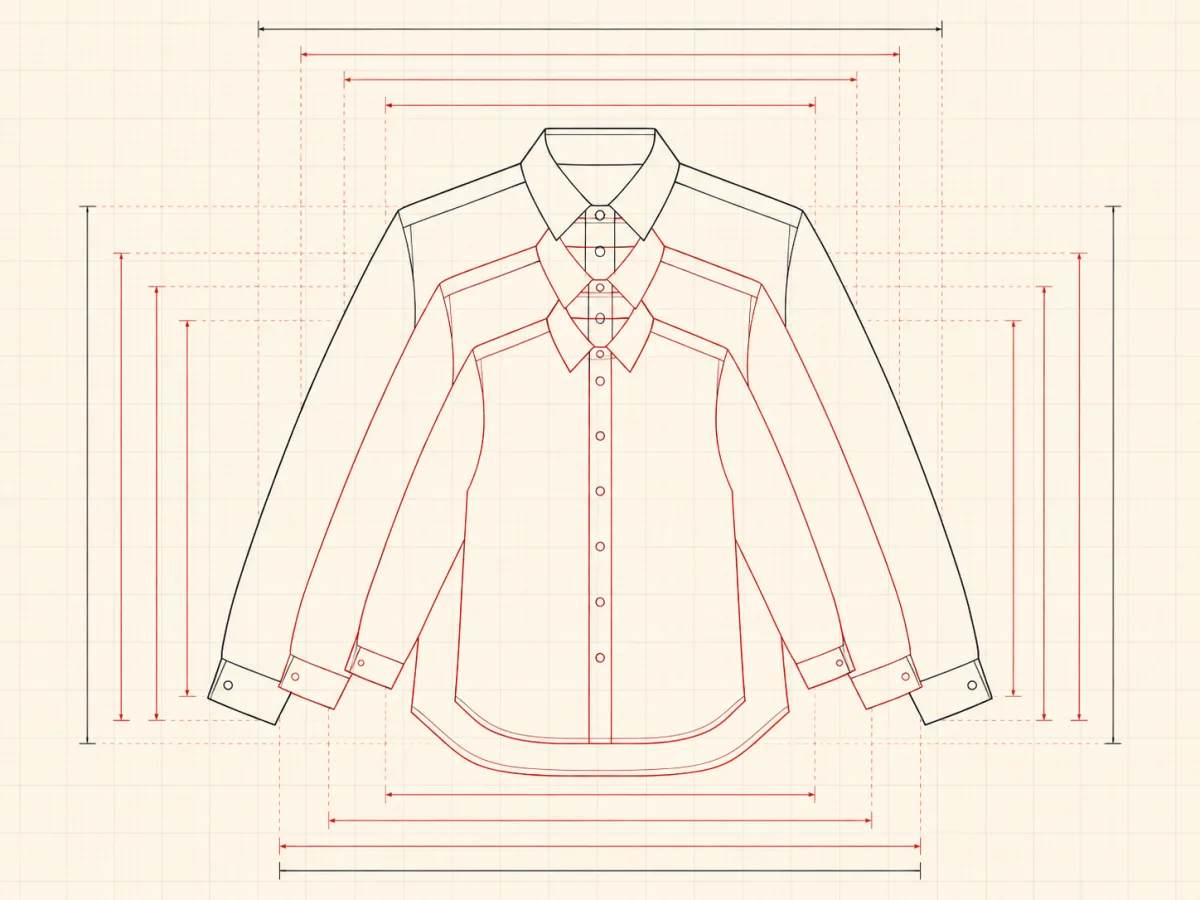
Grading is the part where a garment that fits one person has to fit a range of them, and where a blanket percentage does the most damage.
Not everything grows at the same rate. A chest can gain three centimetres a size while a cuff stays where it is, and an armhole that grows as fast as a chest produces a sleeve nobody can lift their arm in. Each measurement gets its own increment, and each one is editable on its own.
This is my sample size M. I need S, L and XL. What should change and by how much? I don't want the armhole to grow as fast as the chest.
A specific instruction about one measurement is normal, and it is respected exactly — nothing else is adjusted to compensate for it.
01grade_rule[]
Every increment stated, every increment editable
Increments are shown as the step per size, not as a percentage, because a factory grades from a step.
Zero is a legitimate increment and appears as such. Collar stand and cuff width usually stay fixed across a run — showing them as 0 rather than omitting them means nobody has to wonder whether they were forgotten.
| Measurement | S | MSample | L | XL | Step per size |
|---|---|---|---|---|---|
| Half chest | 55.0 | 58.0 | 61.0 | 64.0 | +3.0 |
| Body length, CB | 70.0 | 72.0 | 74.0 | 76.0 | +2.0 |
| Shoulder to shoulder | 50.0 | 52.0 | 54.0 | 56.0 | +2.0 |
| Sleeve length | 57.0 | 58.5 | 60.0 | 61.5 | +1.5 |
| Armhole, straight | 25.3 | 26.5 | 27.7 | 28.9 | +1.2 |
| Cuff width | 6.0 | 6.0 | 6.0 | 6.0 | 0 |
| Collar stand height | 3.5 | 3.5 | 3.5 | 3.5 | 0 |
| Neck opening | 40.0 | 41.0 | 42.0 | 43.0 | +1.0 |
| Hem sweep | 57.0 | 60.0 | 63.0 | 66.0 | +3.0 |
| Pocket width | 12.0 | 12.0 | 12.5 | 12.5 | +0.5 at L |
Stated on the grading table and in the export
These are common increments for this garment type. They are not a grade developed for a particular population, market or body shape, and they are not a substitute for a pattern cutter’s grade. Fit them to the people you are making for.
02How to read it
Three things worth checking before you send it
- 01
The armhole against the chest
If the armhole grows at the same rate as the chest, the largest size gets a sleeve that binds. Growing it more slowly is a deliberate choice, and it is the one most often left to chance.
- 02
What stays fixed
Cuff width, collar stand and button size usually do not change across a run. If yours should, change them — but change them knowingly.
- 03
Where the sample size sits
Grading outward from the middle of the run keeps the error at both ends small. Grading up from the smallest size stacks it all at the top.