
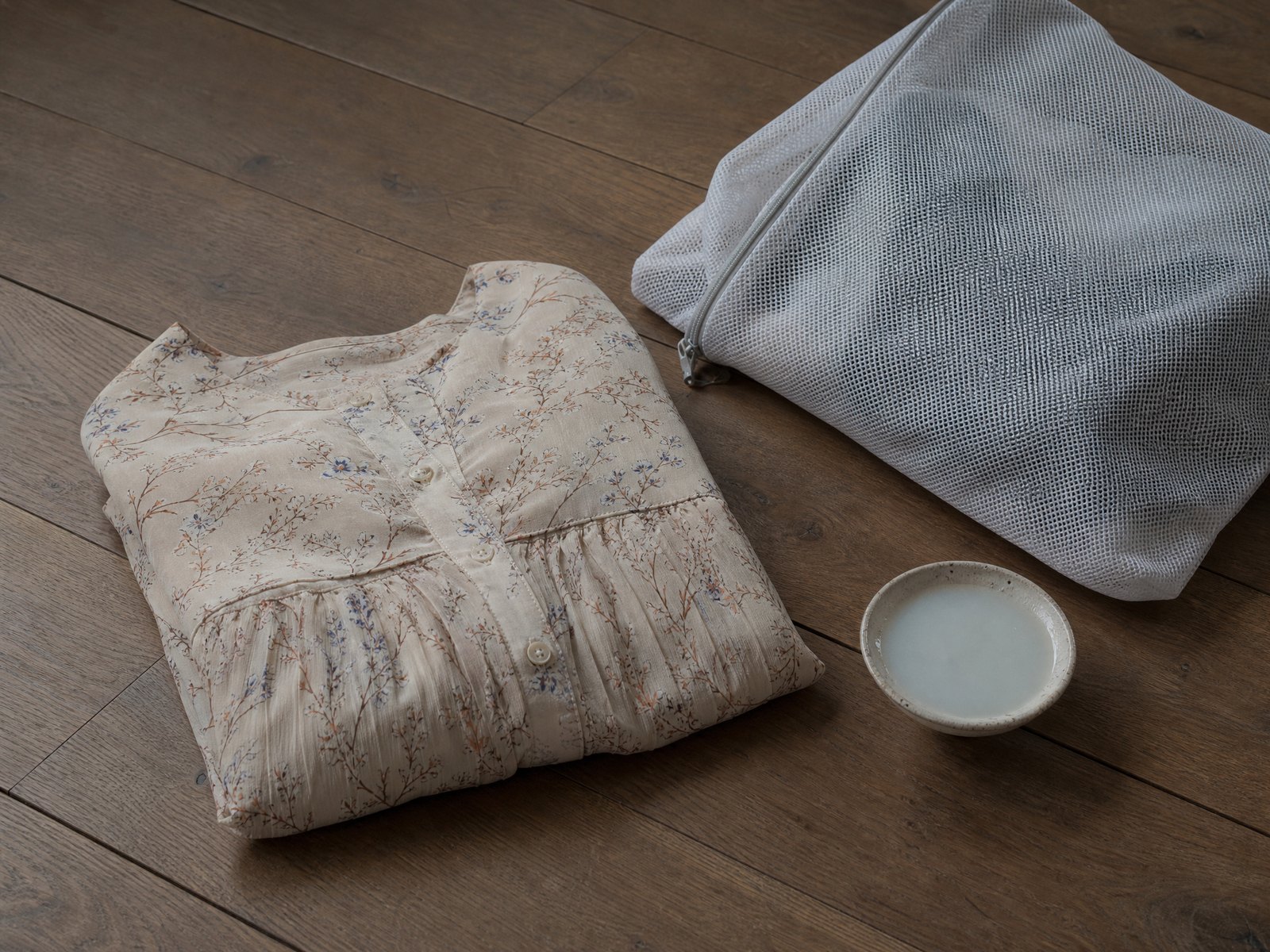
Looking after a dress
Nearly everything that shortens the life of a dress happens in the wash and the dry, not in the wearing. Heat, agitation and hanging weight do the damage. The routines below are the ones we use on our own stock, sorted by the kind of cloth you are holding. The sewn-in label on your dress always takes precedence over general advice, and it is worth reading before the first wash rather than after.
Before the first wash
Close every button and fasten every zip. An open zip is a row of small teeth dragged across fine cloth for the length of a cycle, and an open placket twists and creases. Turn the dress inside out to protect the face of the fabric. Fine, bias and satin pieces go inside a mesh laundry bag. Wash dark slate and navy separately for the first two or three washes — deep dye on a soft palette will find a Chalk White dress if you give it the chance.
Everyday column dresses — viscose, viscose linen, cotton elastane
Machine wash at 30C on a gentle cycle with a mild liquid detergent, spin low at 600 to 800rpm. Viscose is weaker when wet, so do not wring it. Lift it out supported rather than pulled by the shoulders, shake it once, and hang it on a broad hanger to dry away from radiators and direct sun. Iron warm on the reverse while very slightly damp. Cotton with elastane tolerates more, but heat kills elastane over time, so keep the iron off any stretch seam.
Shirt dresses — cotton poplin, linen cotton, Tencel lyocell
Machine wash at 30C, buttons closed. Poplin comes out of the machine creased and that is normal; hang it wet on a hanger and most of it drops out. Iron collar and cuffs from the underside first, then the outside, and press the placket last so the buttonholes sit flat. Linen blends crease by nature — that is the cloth doing what linen does, not a fault. Tencel lyocell is smooth and strong but scuffs into pale shine marks under a hot dry iron, so use steam and keep the plate moving.
Bias slip maxis — viscose satin, cupro, polyester satin
Hand wash cool in a basin with a small amount of delicate detergent, moving the dress gently through the water for a minute or two rather than rubbing. Rinse in cool water. Never wring or twist a bias-cut dress: the grain is running diagonally and wringing sets a permanent spiral. Press the water out between two towels, then dry the dress flat, in shade, with the hem laid straight. Do not hang a wet bias dress — its own weight will pull it 3 to 5cm longer on one side and it will not go back. Iron cool on the reverse through a cotton cloth, or hang it in a steamy bathroom and let the creases fall.
Pleated midis — polyester crepe and blends
Pleats are pressed in with heat and pressure, and any handling that runs across them undoes that. Hand wash cool, or use a delicate machine cycle in a mesh bag with a very low spin. Do not fold the skirt across the pleats at any point, wet or dry. To dry, hang from the shoulders with the pleats running straight down and let the water fall out of them. Never iron a pleated panel directly — a plate flattens some pleats and leaves shine on others. If a crease has set the wrong way, hold a steamer 10 to 15cm away, work down the pleat line, and pinch the fold back with your fingers while the cloth is warm. Store pleated dresses hanging, never folded in a drawer.
Evening gowns and body-skimming dresses
Anything with a separate lining is best dry cleaned — a lining and a face fabric shrink at different rates in domestic water, and the result is a bodice that no longer lies flat. Between wearings, air the gown on a padded hanger for a few hours. Support a long skirt so its weight does not hang from the shoulder seams: fold the skirt over the hanger bar or use a hanger with a hem loop. Steam creases out; do not press a lined bodice flat. Scuba crepe is machine washable at 30C but will hold a fold line if you leave it crumpled, so hang it as soon as it is out.
Marks and spills
Work on a fresh mark straight away with cool water and a plain white cloth, blotting from the outside of the mark inwards so you do not spread the ring. No hot water on protein marks, no rubbing on satin, no bleach on anything on this site — it strips the soft greys to a yellow cast that cannot be corrected. Deodorant and makeup on a neckline lift more easily before they dry. For oil on satin or georgette, do not experiment at home; take it to a cleaner and tell them what caused it.
Storing between seasons
Clean before storing, always — invisible body oils are what attracts moths and what sets into a yellow line at the fold after a year. Hang structured shapes, fold soft knitted or jersey pieces so the shoulders do not stretch, and keep pleats hanging. Use a breathable cotton cover rather than the polythene bag a dry cleaner returns, and add cedar or lavender rather than mothballs. If you have a question about a specific dress or a specific mark, write to support@orasci.shop, and the full care and returns detail is at https://orasci.shop/care.
ORASCI LIMITED
Company number 17264390, registered in England and Wales.
Registered office: 106 Warren Road, Orpington, BR6 6JA, England
Email: support@orasci.shop
ORASCI LIMITED is not currently registered for VAT. No VAT is charged on the prices shown on this website.